Wednesday, April 20, 2011

「東北、がんばってます!」

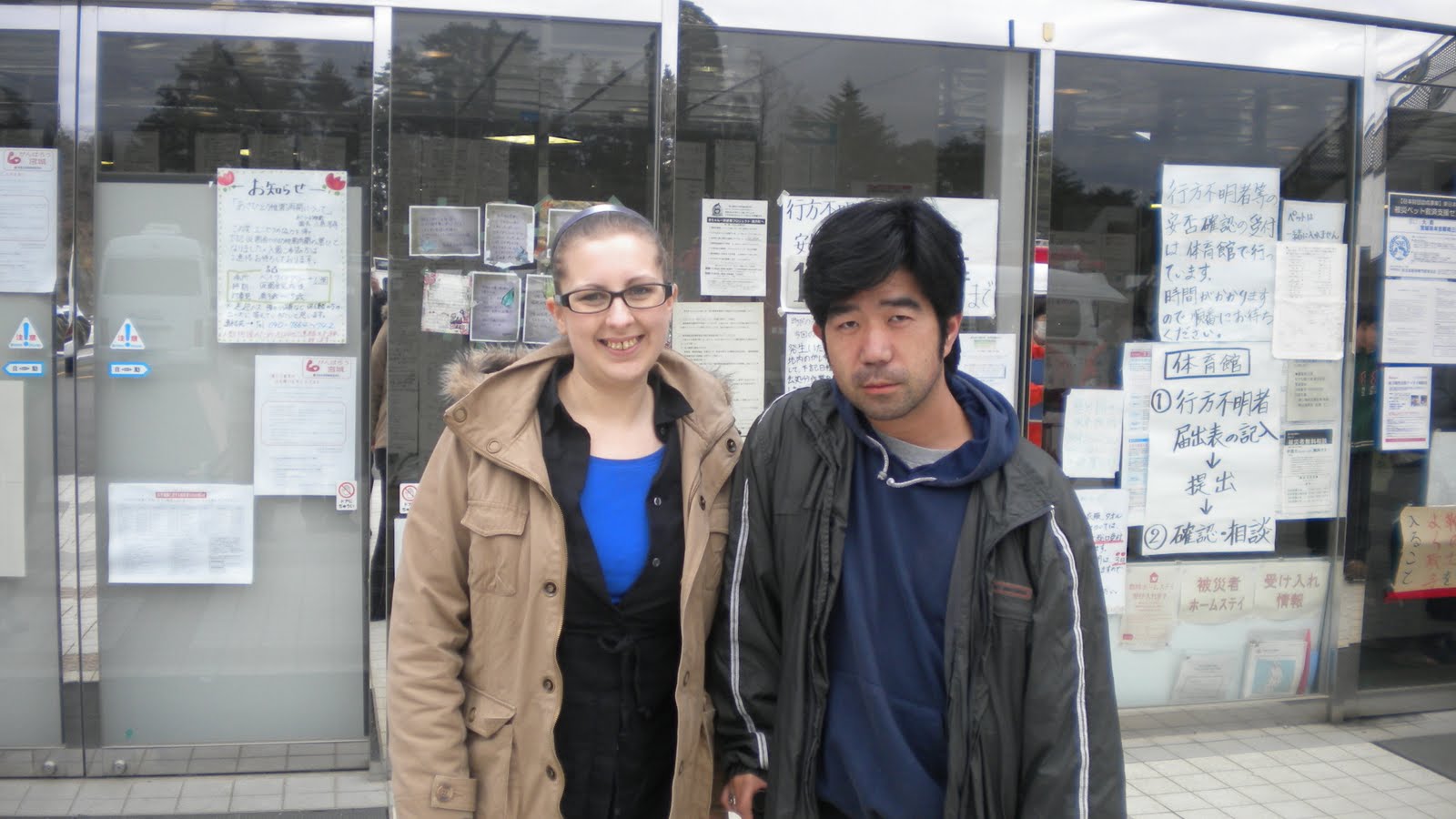
This man, after watching our show at the Bayside arena, came to tell us his story. He is leaning on a crutch in this photo, as the arm and leg on the right side of his body were paralyzed when he was washed along in the tsunami, and was slammed against a tree. What he wanted to tell us was, that while it was cold outside, and he cannot move very well, his heart was warmed by our singing. When Tadaura-san asked him if he could take a picture with me for my blog, he gave me a message to give everyone. "We are all, each and every one of us, fighting here in Tohoku. We are doing our best, with a heart full of thanks." He wanted everyone to know that everyone is 「しっかりがんばってます。」
On the way home, seeing all the signs on the roads and in the store windows, even in Sendai city, 「がんばれ、宮城!」 「がんばれ、志津川!」 「がんばっぺ、日本!」 etc., I almost cried thinking about how wonderful it was that those who had almost lost their lives in the disaster would read a sign like that and want the author of it to know that they were 「がんばってます。感謝いっぱいでがんばってます。」
東北の人たち、被災者、ボランティアたち、どこの人のためにでもがんばりたくなりました。がんばろう、日本!

***

この男性は、ベイサイド・アリーナのショーの後、私たちのところに来て話をしてくれました。この写真で彼は、杖に寄りかっています。津波が来た時に体が木に強くたたきつけられ、体の右側の脚が麻痺してしましました。外は寒く、体を自由を動かせないけれど、彼が私たちに語ったことは、歌によって心が温まったということでした。只浦さんが、ブログのために私と一緒にいるところを写真に撮っていいかと聞いた時、皆さんに伝えるメッセージをくれました。「私たちひとりひとりが全員、ここ東北のために闘っています。感謝いっぱいでベストを尽くしています。」 彼はそこの人達が、「しっかりがんばってます。」ということを、皆さんに知ってもらいたかったのです。

帰る途中、町の道路や店のウィンドーには、仙台市でもそうですが、「がんばれ、宮城!」 「がんばれ、志津川!」 「がんばっぺ、日本!」などというサインがあちこちに見られました。この震災でほとんど命を失いかけた人達がこのようなサインを見て、自分達が「がんばってます。感謝いっぱいでがんばってます。」とサインを書いた人に知ってもらいたいと思っていること、それがどれだけ素晴らしいかを考えると、涙が出そうになります。

東北の人たち、被災者、ボランティアたち、どこの人のためにでもがんばりたくなりました。がんばろう、日本!

Tohoku Trip #2: Revisiting Minamisanriku

東北トリップ#2: 南三陸町を再び訪問

April 20th 4月20日

Yesterday, Gene and I headed out to Fukushima to meet with our friends, Tadaura-san, Eiko-san, and Yoshi, to take a second trip up to Tohoku!!!
昨日、私とジーンは、福島に行き、そこで友人の只浦さん、栄子さん、ヨシさんに会い、それから東北への2回目のトリップを彼らと一緒にしました!!!

This is Gene and I with Eiko-san (the beautiful face behind the mask).
私、栄子さん(マスクを外すと美しいお顔が見えます)、仁です。


Our fearless leaders gathering information about surrounding evacuation sites.
私たちの勇敢なリーダーたちは、避難支援所関係の情報を集めています。


We decided to go to Minamisanriku to revisit the friends that we had made when we sang at the Bayside Arena and Shizukawa primary school on our last trip. We were surprised how many people remembered us.
南三陸に行って、この間のトリップでベイサイド・アリーナと志津川小学校で歌った時に出会ってお友達になった人達をもう一度訪問することに決めました。多くの人が私たちの事を覚えていてくれたので驚きました。

We met a lot of kids that we didn't get to meet last time.
先回会わなかった多くの子供達に出会いました。

This woman had a green jacket that she asked me to sign. She said that she was getting the signatures of people who helped and inspired her during this time, as a keepsake. I was honored to be one of her signatures!
この女性は、グリーンのジャケットを持って来て、私にサインしてほしいと言いました。彼女は、この時にあって彼女にとって助けとなったか、また励ましになった人達にサインをしてもらい、そのジャケットを思い出の品としていると言ってくれました。私は光栄に感じました。

Here we are at the Bayside Arena. This time, we sang outside, and quite a few people stood out in the near-zero-degree weather to hear us sing. Someone requested, "We Are The World" and Gene and I gave it our best shot.
ベイサイド・アリーナです。今回は外で歌いました。かなりの多くの人が気温ゼロの天候の中で立って歌を聞いてくれました。誰かが「ウィ・アー・ザ・ワールド」の歌をリクエストしたので、私とジーンはベストを尽くして歌いました。


Thursday, April 14, 2011

Miyakoshi part 2 - Atago Primary School

宮古市 パート2 愛宕小学校

Post by Robert McNair ロバート・マックネアによるポスト

When we began visiting evacuation centers, we didn’t know how the organizers would receive us, but in every place, we were very well received, and most of them seemed to understand that since the immediate crisis of physical survival has been taken care of, that the emotional care (heart care) of the evacuees is of prime importance.

私たちが避難支援センターを訪問し始めた時は、責任者の人達が私達をどのように受け入れてくれるかわかりませんでしたが、すべての訪問先で温かく歓迎されました。そして、差し迫った実際面でのサバイバル危機状態は一段落した今、避難している人達の情緒的なケア(心のケア)が一番大切だということを、理解してくださっているように思われました。

At the first Evacuation center we visited, Horii-san gave a small speech about our hearts knit together in this time, but she needed to stop and get a hold of herself when she began to cry. At the next centers she kept it together and got though them without breaking down. In every place we sang, there were people who cried. When I saw someone begin to cry, I needed to look away, or I knew I would cry too. We knew that if we walk around crying, it really won’t help encourage these people to give them the faith to go on.

最初に訪問したセンターで、堀井さんがこのような時に私たちが心を合わせてがんばることのスピーチをしましたが、涙が出てくると話を少しやめて間を取る必要がありました。次のセンターで彼女は泣かないよう涙をこらえ話を最後まですることができました。歌を歌った所はどこでも、泣く人がいました。誰かが涙を流しているのを見ていると、私は他の場所に視線をやる必要がありました。そうでないと自分も泣き出してしまうからです。私が泣きながら歩き回っていると、これらの人達ががんばっていく励みにはならないと思ったので、涙をこらえていました。


In this room, almost every person cried while we sang. We thought we might have made a mistake in our song selection, but everyone was so thankful and appreciative, bowing to the ground and thanking us over and over. It seems that for many of these evacuees, this is the first time they have relaxed, and let down their emotional walls and allowed tears to finally flow. When we sing, some just sit there with their eyes closed and drink in the music, as if they are bathing in a heavenly stream.

この部屋では、ほとんど全員の人が歌を聞いて涙を流しました。私たちは選曲を間違ったと思ったのですが、皆さんにとても喜んでもらえました。そして頭を低く下げて、何度も何度もお礼を言ってくださったのです。これらの避難者の方々の多くにとっては、初めて緊張をほぐし、自分を守っていた感情の壁をくずし、涙を流す時となったようでした。私たちが歌を歌う時、ただ目を閉じて音楽を静かに飲み込んでいる人もいました。天の小川に浸かっているかのように。

We’ve seen some documentaries recently where psychologists explain the need for some emotional outlet for people who have gone through traumatic or horrific situations. Some recent reports go as far as to suggest that from this point on, the emotional care of those still in evacuation centers, is the most important thing.

最近見たドキュメンタリーで、心理学者が、精神外傷的経験、または恐ろしい状況を経験した人達には、何か情緒的なはけ口が必要となると説明していました。最近のレポートでは、避難支援センターで今だ生活している人達にとって、今後一番重要となっていくものは、情緒的なケアであると言われています。

I have never seen so many people cry, but at the same time, I have never seen so many people smile through their tears and be so thankful and appreciate of our small efforts of encouragement.

私は、こんなにも多くの人が涙を流すのを今まで見たことがありません。それと同時にまた、こんなにも多くの人が涙を通してほほ笑み、私たちの小さな励ましの行為を感謝して、喜んでもらえるのも初めてのことです。


This woman was looking through the pages of her photo book over and over again. When I went to talk with her, she showed me some of the photos. They were of her house which is no more.

この女性は、写真アルバムを何度も見ていました。私が声をかけた時、彼女は写真を見せてくれました。それは彼女の家の写真で、家はもうありません。


Wednesday, April 13, 2011

Visiting Miyakoshi and Taro

岩手県宮古市と田老町を訪問


April 11th


Taro was notorious for its 10 meter-high sea-wall, built after the town was hit successively by tsunamis in 1896 and 1933. According to our friend who took us around, everyone was taught in school what to do in the case of a tsunami, and the ancient wisdom about where it was safe to build houses, etc. Taro was a city known to be well-prepared for a tsunami.
This is a photo from before the tsunami--all of the houses in view are nothing but piles of garbage now. Reporters assert that the seawall actually killed more people, trapping the water inside a kind of "bowl" that was formed between the wall and the surrounding mountains.
(Here is another photo of the houses built near the tsunami-wall. Again, all no longer standing.)
田老町は、1896年と1933年に津波が続けて起こった後、10メートルの高さの防波堤を建てたことで有名です。あちこち案内してくれた私たちの友人によると、津波が起こった場合、何をすべきか、またどこに家を建てると安全かなどの昔からの知恵を皆、学校で教えられてきたそうです。だから田老町は、津波に対して備えがよくできている町として知られていました。
これは、津波が起こる前の写真です。この写真で見る家屋は、今はすべて瓦礫の山となっています。レポーターは、実際には防波堤によってもっと多くの人が死んだと主張しています。防波堤と周辺の山によって「お椀」のような状態を作り出し、その中に水がたまってしまう結果になったからです。
(これも、また防波堤のそばに立っている家々の写真です。これらの家屋も今はもうこのようには立ってはいません。)


This sign means that the owner has cleared this house to be torn down. These markings were everywhere on pieces of "house" that were barely standing, amidst piles of buildings that didn't hold together as well.
このサインは、持ち主がこの建物を解体してもいいと許可したという意味です。このようなサインはどこにでも見られ、瓦礫の中でほとんど倒れかかっているような家にも見られます。


The men standing behind me were from the Japanese self-defense force. They were poking their long poles into piles of rubble looking for bodies. There were little neat piles of distinctive items in different places on the seawall--maybe to mark places where they were found, or the bodies that they were found near, to help in the identification process.
私の後ろにいるのは、自衛隊の人達です。彼らは長い棒で瓦礫の中を探り、遺体を探しています。防波堤のそばには、特色のある品が積まれた小さな山があちこち見られました。それは遺体が発見された場所か、その場所の近くに印をつけるためで、遺体確認のためなのでしょう。


This is our team (minus Gene, taking the picture) plus Hatakeyama-san, our friend whose hometown is Miyakoshi, and who was visiting to help his parents, as their store and house were flooded with mud on the first floor. He took us around to the places we visited, and we wouldn't have made it very far without him. Thank you, Hatakeyama-san!
私たちのチームと友人の畠山さんです。(ジーンは写真を撮っていたので、この中にはいません。)畠山さんは宮古市出身で、御両親の家とお店の一階が泥であふれていたので、それを片付けるのを手伝うために来ていました。彼が案内してくれたので、あちこち訪問することができました。彼のおかげで、いろいろな事を達成することができました。畠山さん、ありがとうございました!


This girl was with her grandparents. She came up to us to tell us that her birthday was "the day after tomorrow," which happened to also be Gene's birthday. Her grandparents were really happy, talking about what good fortune it was that we had met.
この女の子は、彼女の祖父母と一緒です。彼女は、「あさって」が自分の誕生日だとおしえてくれました。たまたまジーンと同じ誕生日でした。彼女の祖父母の方は、私たちと出会って運がよかったと言って、とても喜んでくれました。

Horii-san and the volunteers putting the dolls into little gift bags.
堀井さんとボランティアの人達が、お人形を小さなプレゼント袋に入れています。

The best part about this last leg of the trip was that we our friends Isamu and Yuki (http://helpeastjapan.wordpress.com) were able to come back up to join forces with us, driving all the way up to Morioka from Chiba prefecture in the middle of the night. So awesome, and it made a big difference for the kids.
この旅の最後の部分に関して一番いい事は、友達のイサムとユウキが(http://helpeastjapan.wordpress.com)チームに再び加わることができ、夜中、千葉県から盛岡まで運転を助けてくれました。彼らがいたおかげで、子供達をとてもハッピーにすることができました。


This is our van, which, although you can't tell by the picture, is mucked out from our travels through the dust trails that wound through the tsunami rubble.
写真ではわかりませんが、この私たちのバンは津波によってできた瓦礫の中のほこりっぽい道を走ってきたので、泥やほこりがべっとりついています。


We got to sing outside in the frigid Iwate temperature at another main evacuation center in Taro.
岩手県の厳しい寒さの中、もうひとつの主要な避難支援センターの外で歌うことができました。

Monday, April 11, 2011

Visiting Rikuzen-Takata--Hikaminoen Handicapped Center and Gymansium


岩手県陸前高田、ひかみの園(介護・福祉施設)を訪問
April 10th  4月10日

Then we visited the Hikaminoen evacuation center, which turned out to be a small gymnasium belonging to a government facility for the mentally disabled. So we did a few songs for them too.
ひかみの園災害避難所を訪れました。そこには小さな体育館があり、国の施設で、精神障害者の方のためのです。そこで何曲か歌いました。


This woman had been put in the facility a few days before. She wasn't handicapped, but she had difficulty speaking. She wept and wouldn't let go of me as she told me that she lost her house and her entire life in the tsunami.
この女性は数日前にこの施設に移されたそうです。精神障害があるわけでないのですが、話すのが困難なのです。彼女は泣きながら、自分が津波で家や自分の全人生を失ったと私にずっと話してくれました。

This is the Hikaminoen evacuation center. Here again, many of the people were out in the wrecked town, but the people who had stayed were so excited to hear us sing and invited us inside right away.
ここがひかみの園災害避難所です。ここでも、多くの人達が瓦礫となった町に行っていたので、あまり人がいませんでしたが、そこにいた人たちは、私たちを喜んで中に受け入れてくれ、私たちの歌う歌に聞き入ってくれました。


To show their gratitude for our visit, they sang the song of Rikuzen Takata for us.
私たちが訪問したことへのお礼として、彼らは私たちのために陸前高田の歌を歌ってくれました。


It's not a very good quality video, but it captured the moment--probably the most emotional moment of this entire trip, for me. I took a picture of the words to the song pasted on the wall of the gymnasium, because I felt so strongly the love that the people of Rikuzen-takata had for its town, and I wanted to remember it.
あまり質の良くないビデオ映像ですが、見所をとらえていると思います。この時は、私がこの旅で一番感情的になった時だと思います。体育館に貼ってあった歌詞を写真に撮りました。陸前高田の人々の、町への愛を私はとても強く感じだからです。だからそれを覚えておきたかったのです。


This woman, my dad met outside, earlier on in the day. She was outside laying out photos that she'd picked up from the rubble of her home, to dry in the sun. Later on, after we sang for them, she told me, "Today is a good day. You came and sang for us, and I found the body of my son." She told Horii-san that she's looking for 2 more family members.
この女性は、この日、私の父が外で会った人です。彼女は、自分の家の瓦礫の中から写真を拾って持ち帰り、太陽で乾かしているのです。後に、私たちは歌を歌ったのですが、彼女は、私に「今日はいい日だった。あなた達が来て歌を歌ってくれ、そして息子の遺体を見つけたから。」と私に言いました。彼女は、もう二人身内を探していると堀井さんに言いました。


This is the view of the town from the top of the hill--one last photo before going home.
これは家に帰る前に取りましたが、丘から町を見渡した写真です。

Visiting Rikuzen-Takata--the Sun Village


岩手県陸前高田市、サンビレッジを訪問

April 10th 4月10日
Today we went to Rikuzen-Takata, another entire town wiped out by the tsunami. The local officials have estimated that between 20 to 40% of the population is dead, and over 80% of the houses were swept away, even though the town had a 6.5 meter seawall.
According to some news stories, the harbor-gates got jammed, and 45 firemen got swept away as they tried to close it manually before the tsunami reached the town.
今日、陸前高田市を訪問しました。この町全体も、津波によってほぼ壊滅状態です。地元の役所関係によると、人口の20%から40%の人が命を奪われ、6.5メートルの防波堤があったにもかかわらず、家屋の80%以上が波で流されました。
あるニュースでは、津波が来る前に、港のゲートが閉めようとしていた45人の消防隊員も流されたしまったということです。


All of the evacuation zones were up on the top of the surrounding hills, and fairly close together. But to get to each other, one had to go down the hill and through the wrecked town around to another road up another hill.
We went to the Sun Village dome, which is a big open-air sports center with fake grass. Because it was open, all the evacuees slept in tents, donated by the Rotary club.
災害避難所は、全部、町を囲む丘の上にあり、互いにわりと近い距離にありました。でも隣りの避難所に行くには、丘を下りていって、瓦礫の町を通り、そしてまた丘を上がっていかなくてなりませんでした。
私たちは、サンビレッジ・ドームへ行きました。そこは、人工芝を敷いた広い戸外のスポーツセンターです。戸外なので、避難者の人たちは、皆、ロータリークラブが寄付してくれたテントで寝泊まりしていました。


Most of the people who live in the evacuation center were out poking through the wreckage of their houses, or looking for bodies, so the space was relatively empty. But people grabbed up the dolls that we brought them, and they were thankful for the few boxes of toilet paper that we had with us.
避難所に住んでいるほとんどの人が、自分の家を見に行ったり、身内の遺体を探しに行っていたので、そこにいた人は少ないでした。でも私たちが持って来た人形は喜ばれ、トイレットペーパーも感謝してくれました。